It was Monday morning, and the managing editor approached my
desk with a gleam in his eye and what I hope was a smile on
his face.
He wasn't waving my Sunday column around, but he might have
memorized it.
"I will give you $1,000 if
you can really smell and taste all those things you said you
found in that wine," he said.
"I hope the check's
in the mail," I shot back. "I could use the money."
"Apples and grapes,"
he harrumphed, ignoring me. "Figs. Coconut. Probably
old shoes and wood chips."
About that time his boss strolled by, gave us a look and
shook his head.
I think my boss was just kidding. He knows wine himself.
He's got a point, though. The complex aromas and flavors
that distinguish fine wine are usually subtle and sometimes
almost - but not quite - as elusive as the emperor's legendary
new clothes.
It's not hard to learn to recognize these subtleties, but
it takes practice, which makes perfect in wine appreciation
as it does with just about anything else worth appreciating.
Bordeaux wine maker Alexis Lichine once said the best way
to learn wine is by opening bottles.
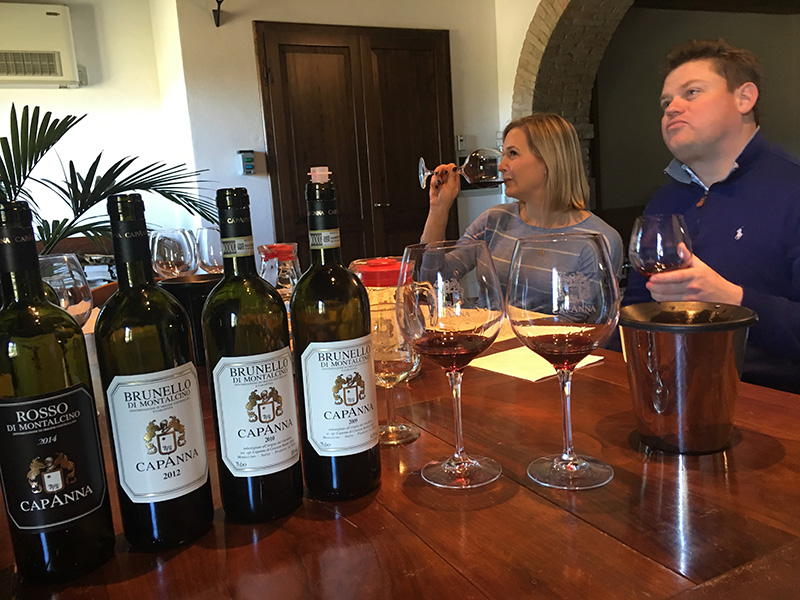
I'd add that the best way to learn wine quickly and well
is by frequently tasting wines "blind," judging
comparatively without knowing what's in the glasses until
you've made your notes and announced your conclusions.
Nothing concentrates the wine taster's attention quite as
intensely as having someone waiting to rib you mercilessly
if you can't tell a Chardonnay from a Chenin Blanc.
Gaze under such circumstances at two near-identical glasses
of golden Chardonnay, and it won't take long to discern the
nuances of gold, bronze and brass, apples, chestnuts, figs
and yes, even coconut in the wine.
I rate the wines for this column blind for another reason:
Even the most objective judge will be influenced to some degree
by knowing what's in the glass. When you're comparing a $20
nectar against a $3 jug wine, it's a lot easier to be honest
if you don't know which is which.